

Straight to action mode: the impact of COVID-19
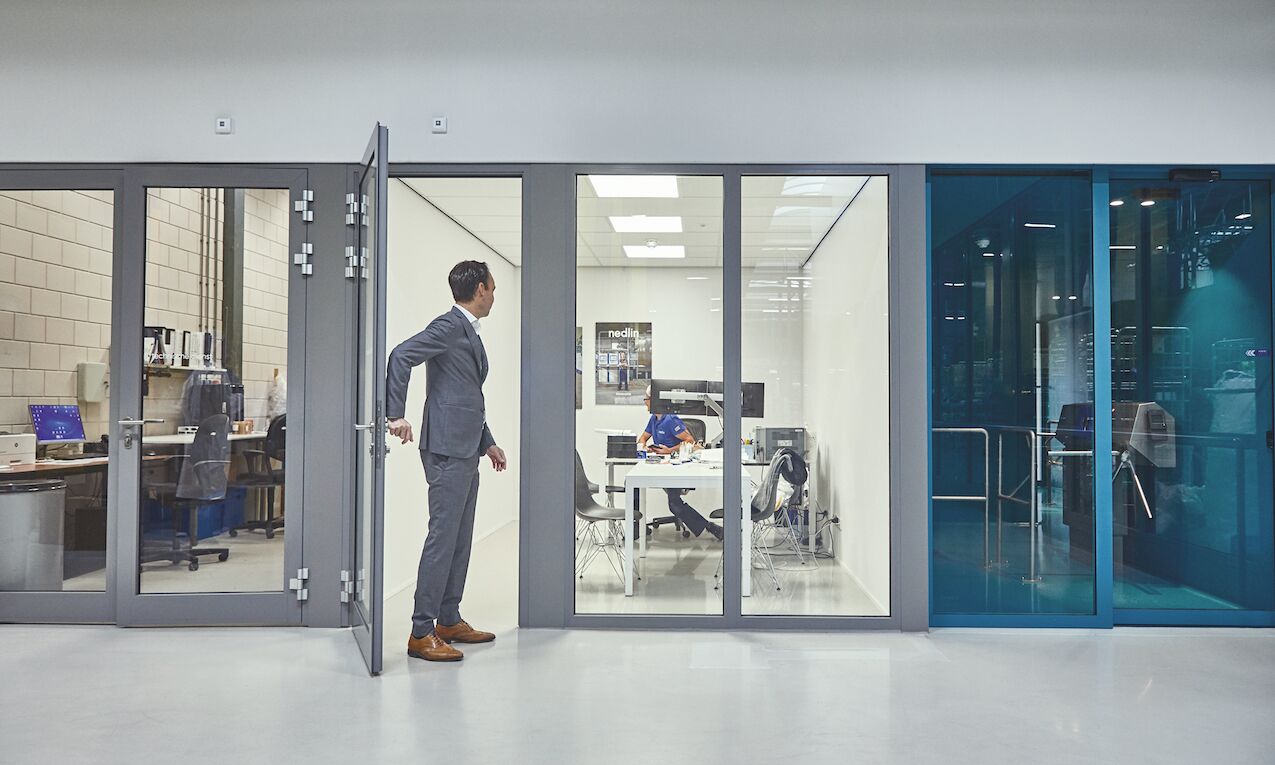
On March 15th 2020, the Netherlands went into lockdown. Suddenly, the world looked very different. Schools closed, and bars and restaurants closed their doors. Hospitals were forced to adjust their care to the new pandemic. It also had a huge impact at Nedlin. STEF DE WIN, who is at the helm of the family business together with his brother Luuk, talks about the impact COVID-19 has had on the company, employees and clients.
“At first everyone thought: this has nothing to do with me.” Stef tells his story in the laundry facility in Elsloo. It’s the end of August, the summer is almost over. “We couldn’t predict the impact that COVID-19 would have in the Netherlands. Everything went on as usual until mid-March.” Prime Minister Rutte had already called on the people in the Netherlands to work from home as much as possible, but there was no lockdown yet. That changed in the afternoon of March 15th, when the ministers Bruins and Slob announced that schools, catering companies and sports clubs would close.
Offering perspective
The De Win family was spending that weekend in the Ardennes. “On Sunday afternoon, around 12:00, we had a feeling that things would go wrong”, says Stef. “That afternoon, the first employees that would start working from home were approached. We sat down for a meeting with the works council right away. We have frequently done this, to stay in touch with everyone.
You have to be clear about what you see. You also have to offer the employees perspective.
The tricky thing was that we couldn’t look ahead. How serious would the impact be? How long would it be? Three months? Six months? At the same time, you have to be clear about what you see. You also have to offer the employees perspective. We have had to adjust this process every week. There was constant communication.”
Action mode
The worries about the new situation immediately pushed everyone into action mode. The sector had to fight for the qualification ‘key occupation’. Think about it: if the laundry facility would stop, there would be no clean linen on the hospital beds, and doctors and nurses would have to miss the protective clothing that they need to do their job. “On top of the strict protocols, we had to protect our people for the purpose of business continuity”, says Stef. After the qualification as a vital occupation, childcare had to be arranged. “That was not easy.”
Unburden
At Healthcare, there was a shift from standard care to corona-related care. Stef: “Textiles had to be processed as potentially contaminated. They arrived in a coloured bag. We came up with our own protocol, to protect our employees.” The sector reacted to that later. “As an independent company, you can implement measures more quickly.”
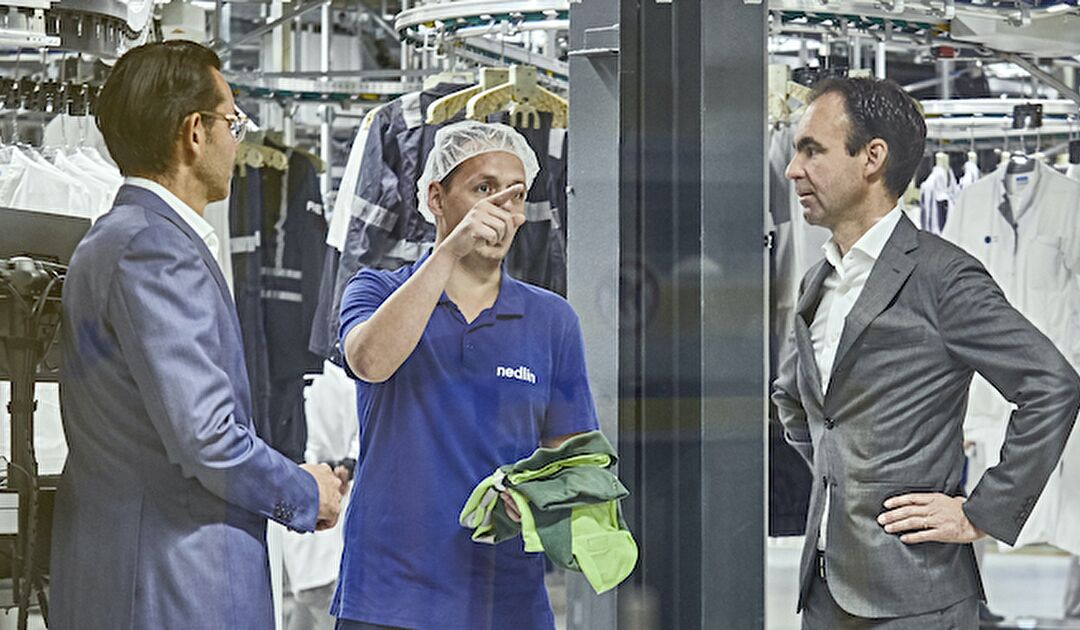
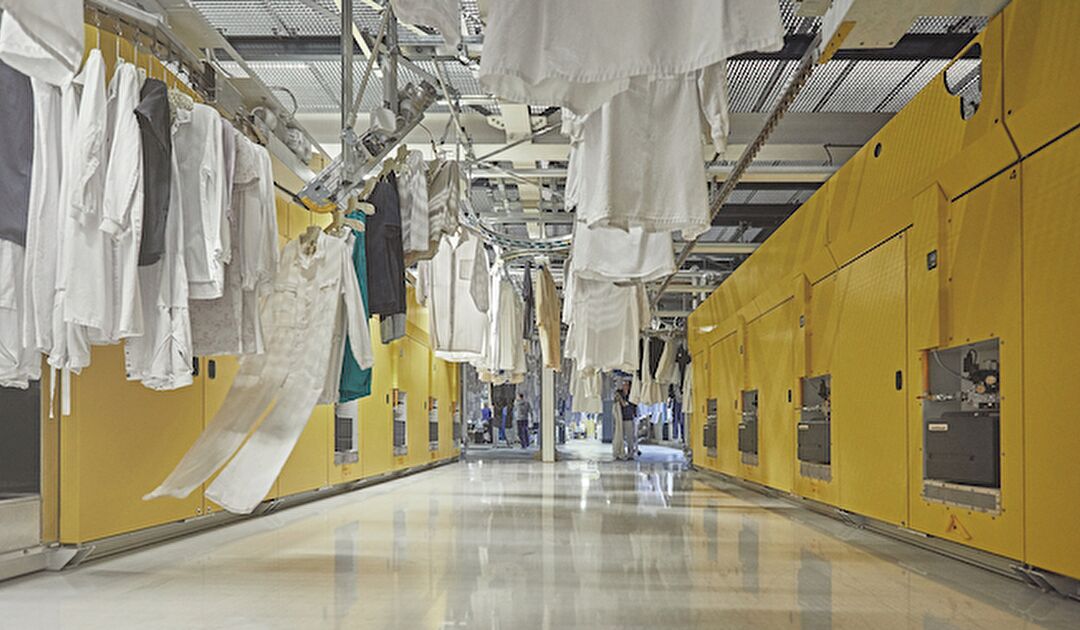
Potentially contaminated laundry is processed in bulk in a separate production line, without sorting in advance. This way, employees don’t have to touch it. Only after it has been processed, the laundry is sorted and washed again. “We worked very hard to process the laundry”, says Stef. Aside from that, the company actively contributes ideas to unburden healthcare organisations as much as possible. “We also worked very hard behind the scenes. We got a lot of questions from clients, and we had to purchase a lot of extra linen so our clients would have enough textiles.”
We worked very hard to process the laundry. We also worked very hard behind the scenes.
For instance, a lot of extra linen is needed for the emergency hospitals, and there is an enormous lack of protective clothing. Clients and non-clients in healthcare are provided with reusable clothing. “People realised that the use of disposables produced an enormous amount of waste. This didn’t feel right.” Together with the laundry facilities, the RIVM established an emergency procedure, to use disposable products once more by sterilising them. In this procedure, Nedlin takes care of the entire logistical process.
A virtue of necessity
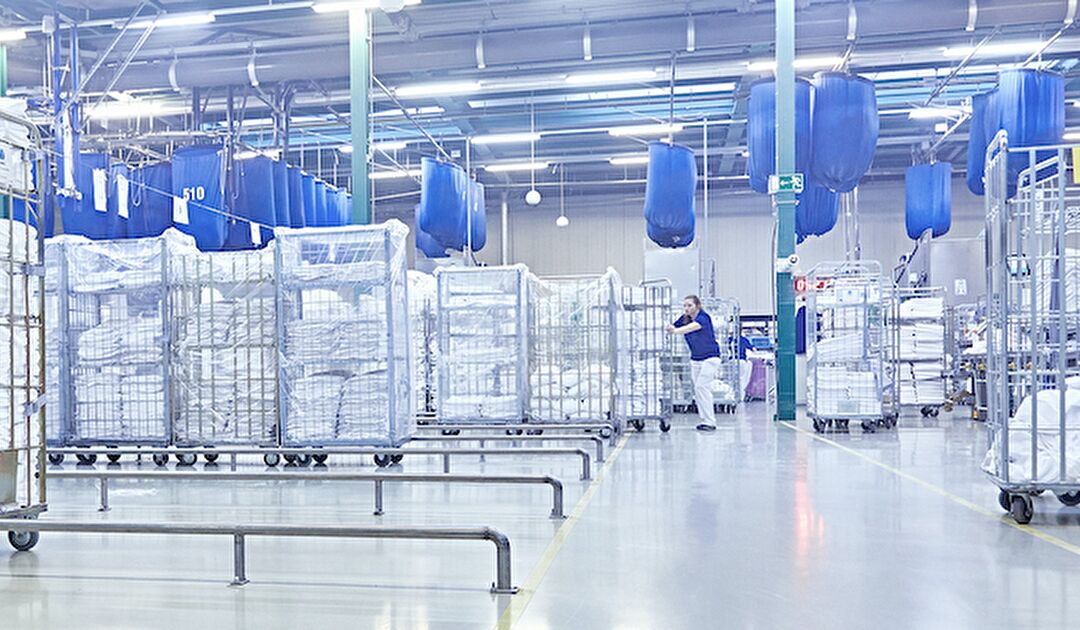
At Industry, a lot of our clients started working from home, but the impact this had on laundry volumes was limited. So the facility continued to operate as usual. On the other hand, the consequences for the hospitality sector were enormous. Clients from large cities saw themselves forced to close their hotels. The hotels decided amongst themselves to keep some hotels open, and refer clients here. Leisure also came to a halt. There was no laundry volume at all. For the first time in the history of Nedlin, the laundry tubes at Hospitality were empty.
The company made a virtue of necessity. Stef: “We did some large maintenance to the factory and sorted the linen supply.” Nedlin believed that it was important to keep employees busy with work during these uncertain times. Fixed employees and fixed agency workers were redistributed to the other sectors, Healthcare and Industry, and they received training if necessary. Unfortunately, a large part of the company’s flex workers had to be sent home. Staffing organisation Manpower requested a settlement for them.
Everything different
Employees who can do their work from home, stay at home. On the work floor, there are walking directions, separate shifts and spread out canteen visits, to ensure the necessary distance between employees. Everything is different for our drivers as well. Clients have their own protocols, adjusted to the situation. Some of the trucks have been standing still for three months. Time is used as effectively as possible here as well: for the development of new routes, to get new driving licences, and to carry out preventative and large-scale maintenance.
The close contact with clients and the smart logistical organisation results in stronger client relationships. Our service has not suffered at all.
The closed borders posed an extra challenge. “It required a lot of paperwork to get employees from Belgium over the border”, says Stef. Account managers usually have video conferences with clients abroad. The logistical process was completely turned on its head. “Hospitality came to a complete halt, and then it was slowly started up again. That means that the route has to be adjusted every day. It used to be easy to predict, but now there are different requirements every day.” But this can also have advantages. Stef: “The close contact with clients and the smart logistical organisation results in stronger client relationships. Our service has not suffered at all.”
Working hard
At first, a lot of employees saw the new situation as something of a holiday. Some colleagues were a little disoriented by the lack of rhythm and social interaction. “We really had to coach those employees”, says Stef. He laughs: “I had to be on my soapbox a lot.”
The relationship that we have with each other in the company, ensures that we can find the solution together. It has helped us a lot.
Slowly the employees got used to the new reality, and the employees started with their new work. Supervisors working in other segments, engineers working with more flexibility. A lot of employees working from home were busy with home education, and had to miss their colleagues. “It really helps that everyone is working so hard”, says Stef. “The relationship that we have with each other in the company, ensures that we can find the solution together. It has helped us a lot.”
It’s good for solidarity. Stef can see that COVID-19 has increased the mutual understanding for challenges in other branches of the company. “We took care of it together.”
Furthermore, it helps that Nedlin is a healthy and diverse company. Stef: “The spread across three segments really contributes to a healthy business. We can take a blow.”
Ambition
By now, the situation has normalised somewhat. There is perspective again, even if it comes bit by bit. “You take it week by week”, Stef says. The awareness of personal hygiene has grown, in healthcare as well. Clothing is changed more frequently, and there is stricter compliance with protocols.
And there is room to look ahead again. Stef laughs: “Despite everything, we have had time to work on our new location. We call that ‘Anticyclical investment'. I’m convinced that it’s good to evaluate your business every few years, in order to stay future-proof.” The ambition? “To build a 100% sustainable laundry facility in 2021.”