

From towel to towel
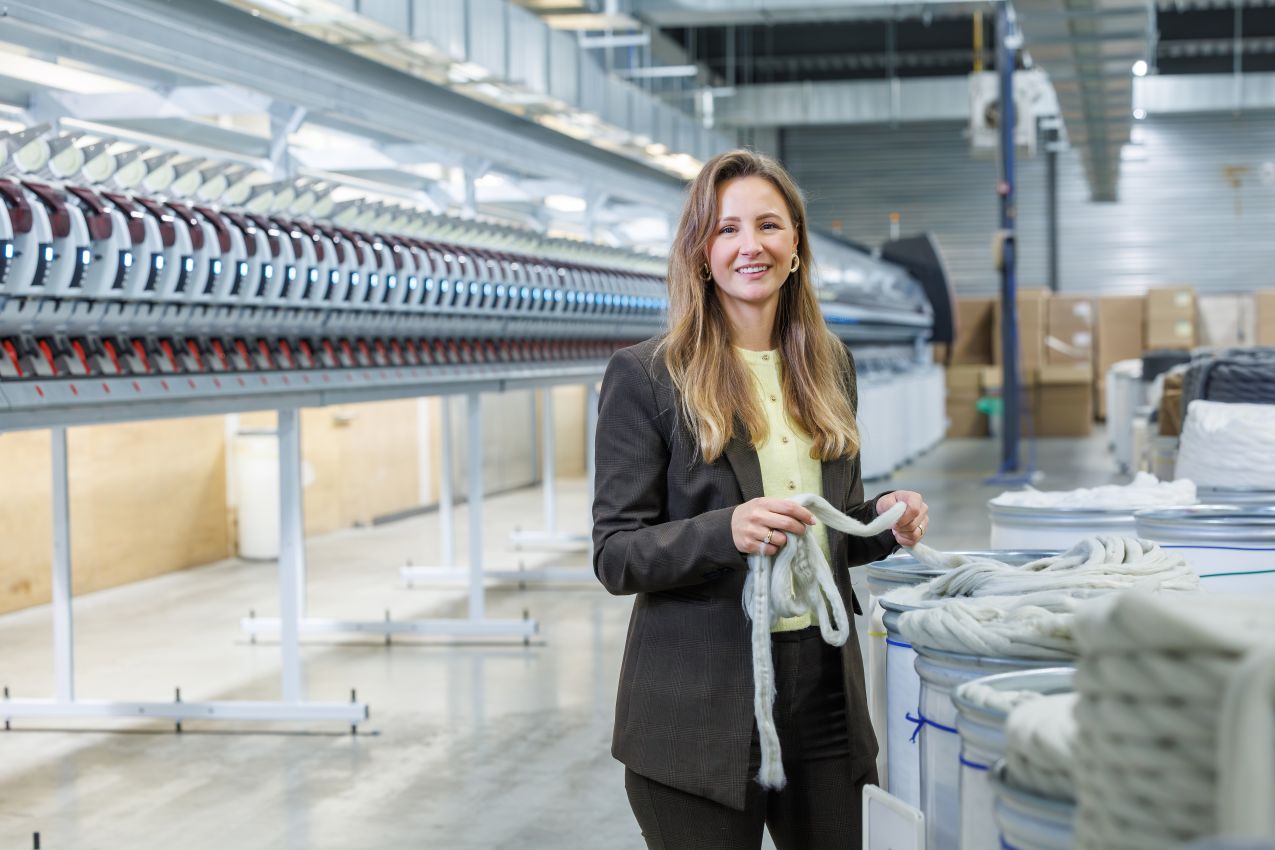
Autumn 2025 saw the official kick-off of the Circular Chain Project (CCP) Circular Towels. Together with partners Spinning Jenny, Frankenhuis, Lamme and process facilitator Plennid, Nedlin is working on an innovative chain: from collected textiles to a high-quality, fully circular towel. Liset Pander, responsible for the operational management of Spinning Jenny, explains the project.
The start
“The CCP Circular Towels started for Spinning Jenny with an assignment from the Dutch government: turn work clothes into towels that we can hand out as gifts during the NATO summit. We then developed a beautiful, greenish towel. As a partner in CIBUTEX, a cooperative for circular business textiles, we know that there is an awful lot of textile going around in the laundry business. So we thought: with the lessons from that first towel in mind, can we develop a circular towel for a larger audience? And thereby further increase support and our sustainable impact? That’s how this project came about.”
The spinning mill
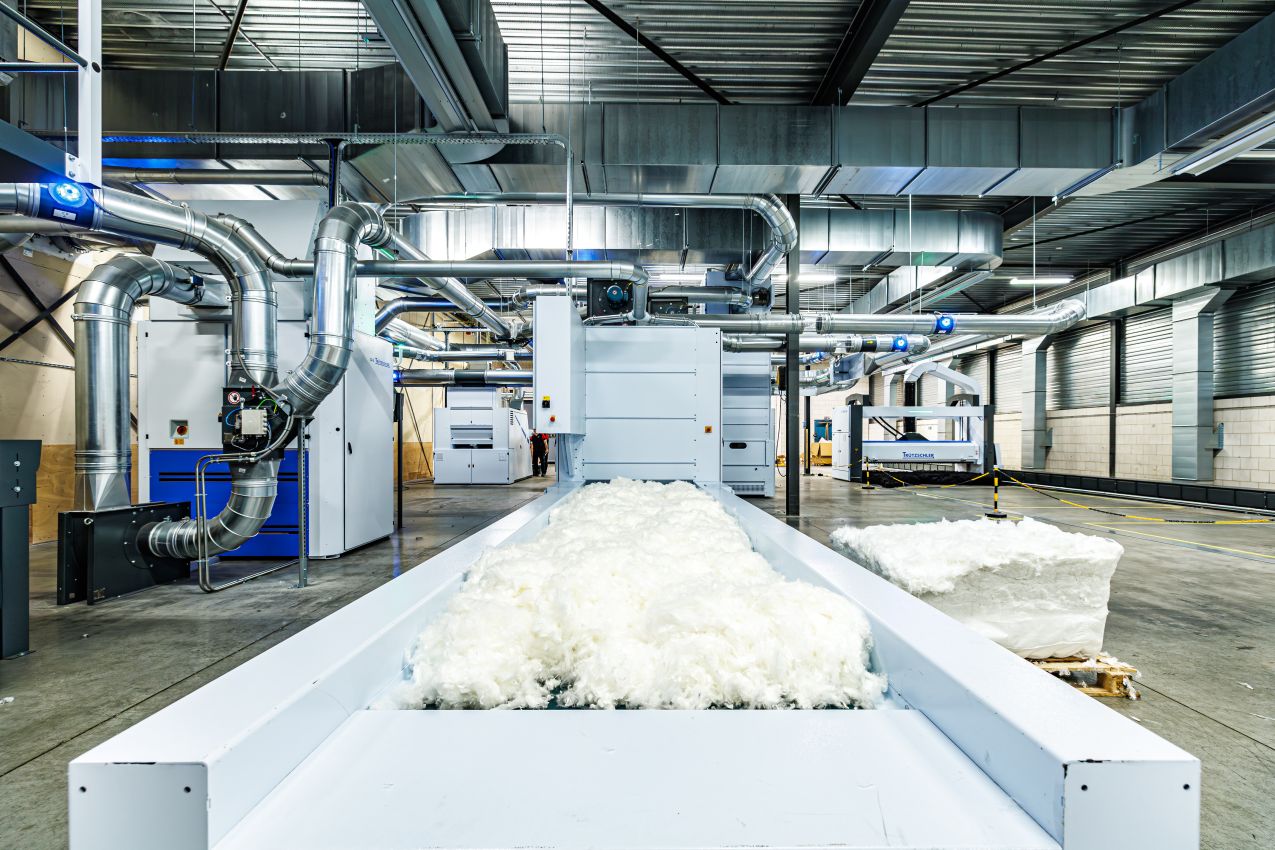
“Spinning Jenny is the only open-end spinning mill in the Netherlands. We are focused on processing short and therefore also recycled textile fibres. The fibres are first made into a semi-finished product, a ‘sliver’, which we then process into yarns for items such as curtain fabrics, workwear fabrics or towels. We purchase the fibres from various partners, and the rest of the processing takes place in our production area in Nijverdal.”
The ambition
“We think it is important to increase support for sustainability. A lot of textile goes abroad; very little is upcycled within the Netherlands. While there are already Dutch companies that can recycle textile fibres very well. Therefore, our focus is on making and marketing those yarns so that they become commercially available in the Netherlands and Europe.”
The project
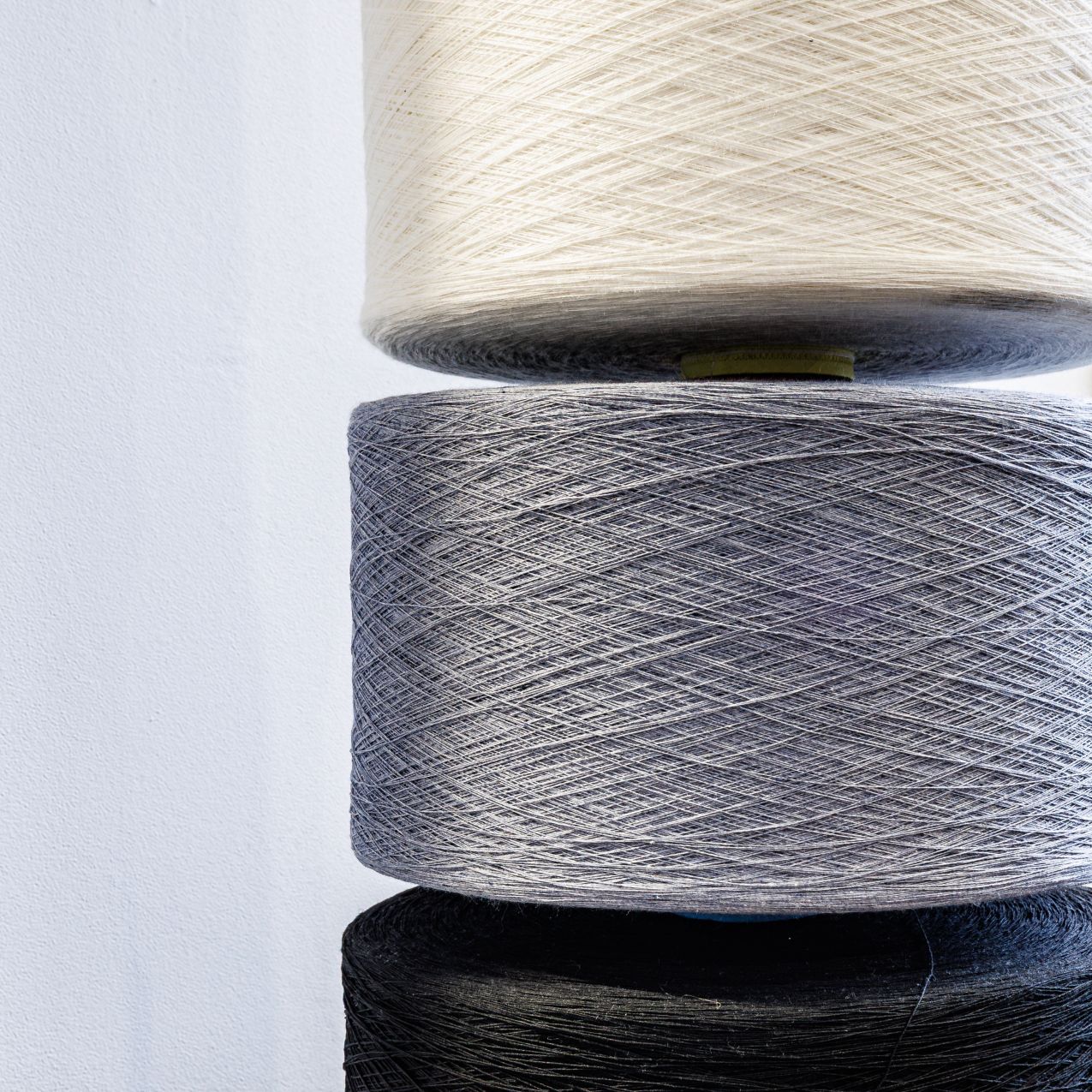
“In the CCP Circular Towels, we are investigating what percentage of recycled textiles derived from a towel can be reused for a new one. We mix recycled fibres with new cotton fibres in three different blends, returning 20, 40 or 60% of the old towel, respectively. In the end, we spin three types of yarn, making nine qualities of towels. Then we see which towels come out the best in the laundry tests.”
The chain
“The towels to be recycled come from two laundries, Nedlin and Lamme. For them, the chain starts when a new towel is offered and ends when it is rejected. Project partner Frankenhuis takes care of collection and recycling. Spinning Jenny mixes new fibres into it and spins yarn from it. That then goes to the weaving mill. This is usually followed by a finisher, but in this case the towel goes straight from the weaving mill to the laundry, which simulates the usage phase for this project to see how it holds up.”
The towel
“The average towel contains at least 400 grams of textile per square metre. Most hotels use a slightly nicer quality, towards 500g. By recycling such a towel, you can make a lot of impact. And if there is enough support, it is also of commercial interest to us. Our requirements for such a towel made of recycled yarn are in line with what consumers are looking for in a towel. That it dries well, leaves no lint behind, washes well, and that it’s soft. And looking further: is it colourfast, are stains easy to remove? Circularity comes as an additional aspect. Ideally, we would like to make a more sustainable copy of what is currently on offer. Although I do expect the colour to differ slightly: the coloured yarns in the care label will also be part of the blend.”
The challenge
“For Nedlin, the challenge lies in how the towels hold up under normal laundry conditions. For us, the greatest challenge is in technical feasibility. We want to bring as much recycled fibre into the towel as possible while ensuring quality. The technical challenge for this lies in finding the right machine settings, but also in recycling. How can we recycle a towel in such a way that the fibres remain good for our yarn spinning process for as long as possible? We want to explore that question with this project. In mechanical recycling, no two textile materials are the same. Recycled cotton behaves very differently from virgin cotton - we have to constantly adjust the set-up and settings of our machines accordingly. That really appeals to me: the challenges in engineering combined with contributing to a sustainable future.”
The impact
“We all see the effects of climate change. If we want to preserve the earth for future generations, we must eventually move towards a circular use of raw materials, or at least a sustainable use. That, together with our passion for textiles, is what drives Spinning Jenny. In addition, we want to bring back local production. How great would it be if we could produce in Europe what we consume here? That also saves in CO2 emissions. At CIBUTEX, we see how big our impact can be when we help make the laundry world more sustainable. In addition, Spinning Jenny is also looking at less obvious materials, such as shoe recycling. And we are working with Auping to see what we can do in the mattress world. Because ultimately, the textile waste mountain we create together simply has to shrink.”
What's next
“Currently, the focus is mainly on the technical evidence. How high can the percentage of recycled material be? At what percentages is the towel an interesting product for the laundry to offer to customers? A follow-up to this project would be to again recycle the towels that have held up well in the laundry process. That way, we can find out how many times a towel can go through that whole process. In doing so, we must also consider whether the towel is comfortable for the user. And what, besides its technical and qualitative value, is its economic value. This project is a great starting point of a development, with a lot of potential for an existing market. But further development will be needed.”