

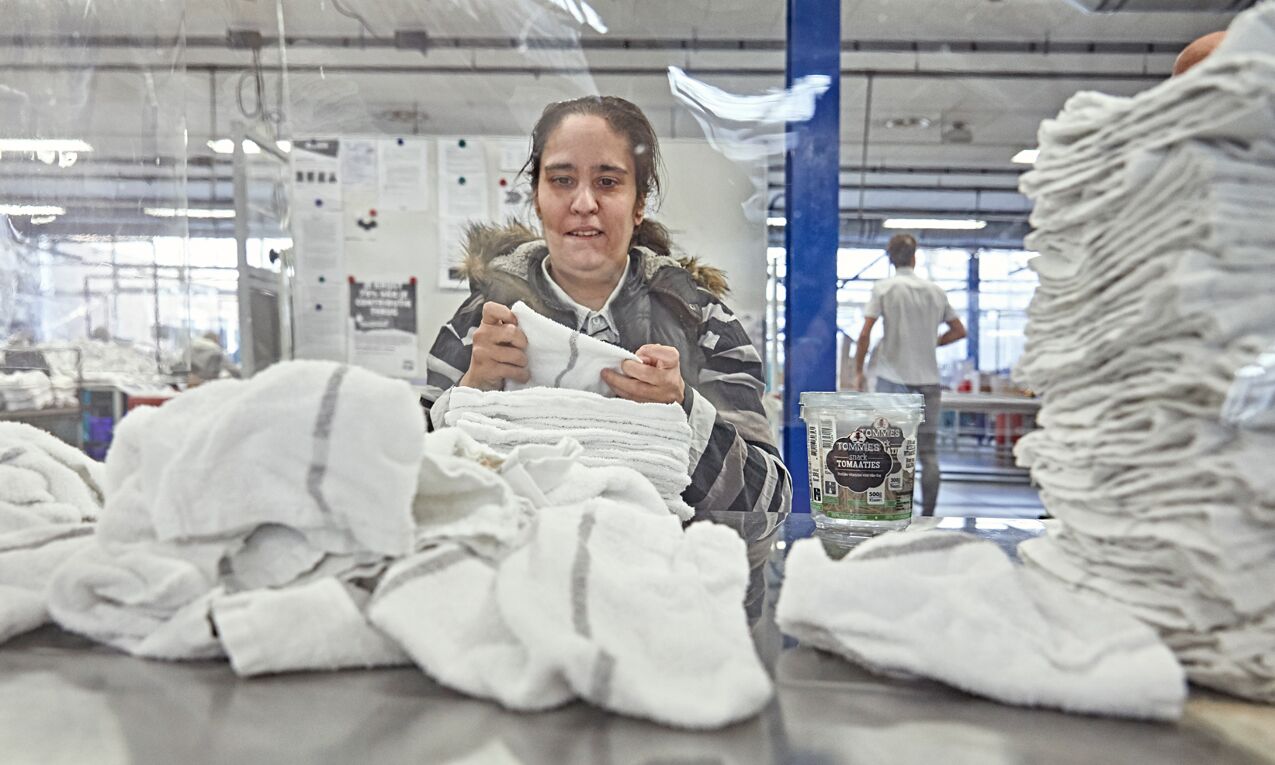
MTB Maastricht has been packing washcloths for Nedlin Healthcare for years. With 5.2 million pieces per year, about 21,000 washcloths per working day, this is no easy feat. High time to get to know this special company. And to ask director Marcel Jöris why the collaboration with Nedlin is so important for 'his' MTB.
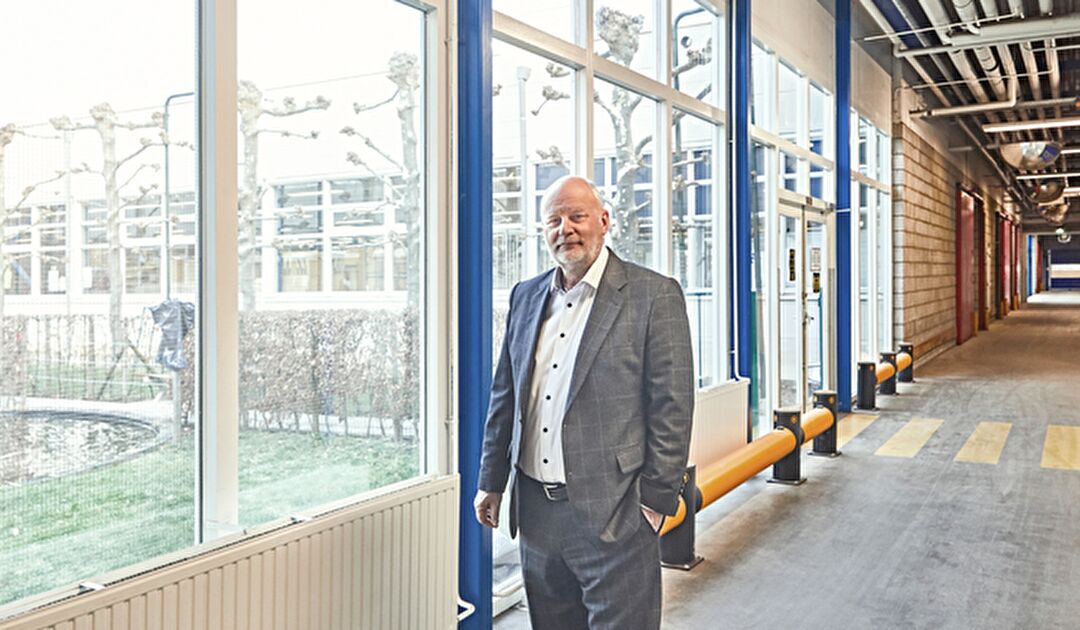
“It's a quality to do the same work day in and day out. To continue to do that accurately, to stay motivated.” Early on in the conversation it is clear that Marcel Jöris is a man of opportunity. Someone who prefers to focus on what is possible, rather than what isn’t. He has been working for social employment agency MTB for almost 25 years. MTB provides social employment services for the municipalities of Maastricht, Meerssen and Eijsden-Margraten. The company offers an infrastructure in which every year, several hundred people with a distance to the labour market follow a work placement programme.
Training company
Of the permanent employees, some 1,100 are still employed on the basis of the Wsw, the Wet sociale werkvoorziening (Social Employment Act). Since 2015, MTB has increasingly developed in the direction of a learning company for a broader target group. In order to fulfil this task, various business activities have been developed over the years: from gardening services and security to packaging and production-related activities.
Thus MTB specialises, among other things, in building bicycle wheels for the top segment of the market. Wheels that go for € 5,000 a set. “And that’s without a bike, not even a tyre!”, exclaims Jöris. “I'm quite proud of that. Why? Because it shows that you can also deliver great products with people with a disability.” There is also an electrical department. In addition, there are several joint ventures with the business world.
Varied offer
“The reason we're so broadly oriented is because we work in reverse”, explains Jöris. “Normally you develop a product, set up a company, and then find people to fill your vacancies. With us it's the other way around. We get people with the assignment: do something sensible with this. We've looked for the best possible fit between our people and our activities so that we can properly fulfil that social mission.”
Companies that do business with us fulfil a social commitment by working with a target group with distance to the labour market.
This means that MTB looks for activities which are valuable to its employees, and which at the same time meet a need in the market. Jöris: “Everyone has their own qualities and talents. It is important that people feel happy in their daily work. Our diversity ensures that everyone is sufficiently challenged. And at the same time, we're creating activities that make us money”.
Social involvement
Other companies also regularly knock on MTB's door. “It’s often a coincidence that companies know how to find us”, says Jöris. “Because we're doing something innovative or offering cheap hands.” Often, the social component also plays a role. “Companies that do business with us fulfil a social commitment by working with a target group with distance to the labour market.”
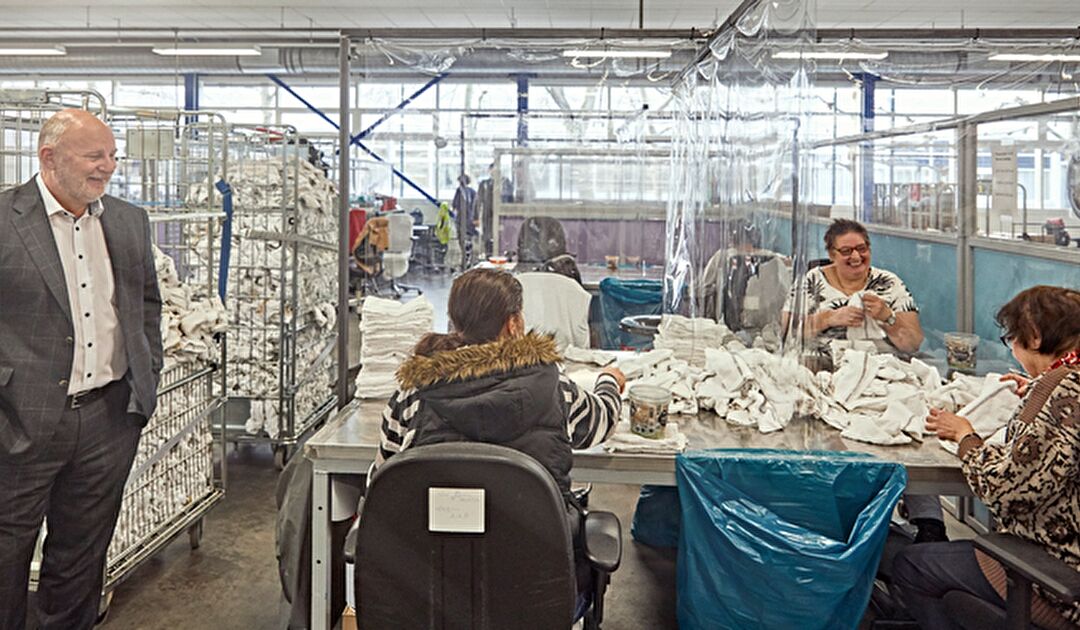
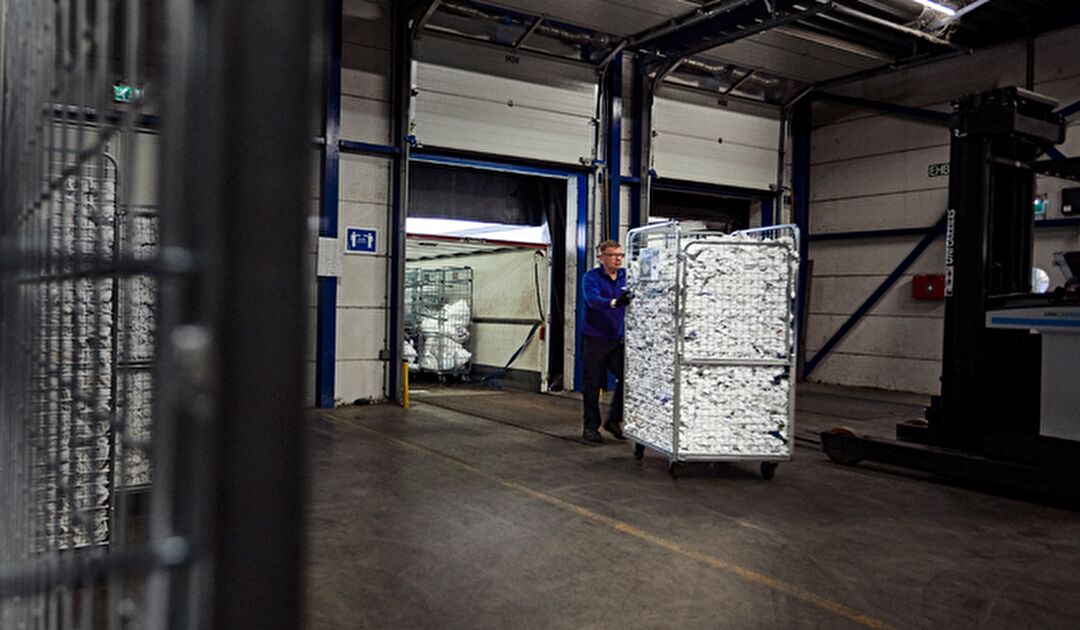
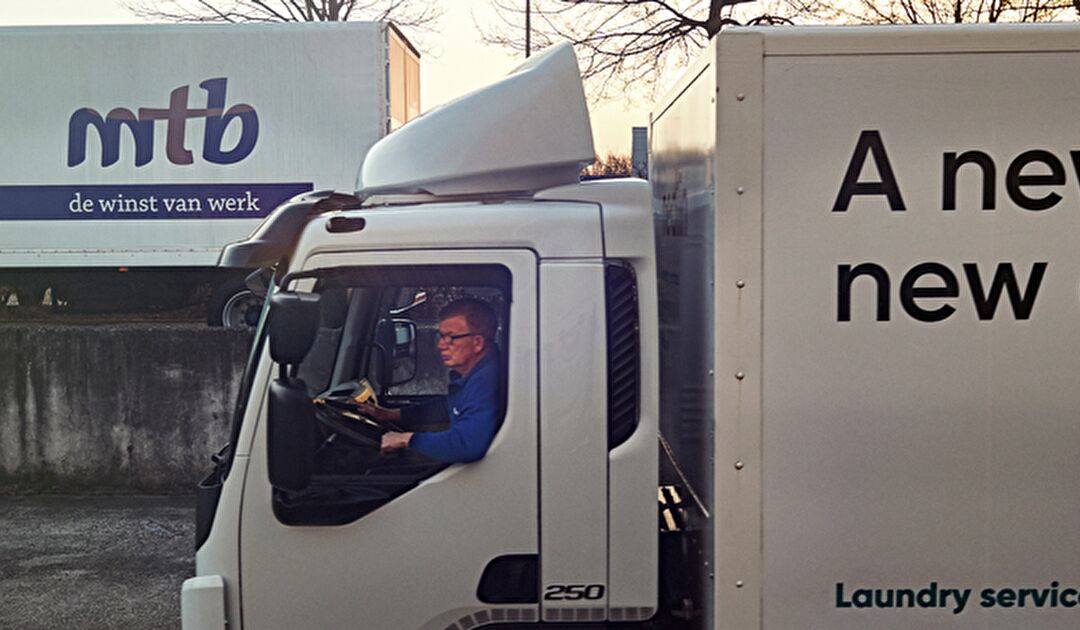
This is also an important argument for Nedlin. The collaboration with MTB is seen as a win-win situation, beneficial to all concerned. Every day, a mountain of washcloths is transported from the Healthcare laundry in Elsloo to Maastricht in roller containers. Jöris: “They just came out of the dryer, a little crumpled. We take them out, iron them flat, and bundle them into packages of 25 pieces. We put a rubber band around them and then they go right back into the container”.
Long-term collaboration
The cooperation with Nedlin is, as Jöris calls it, ‘open-minded’: “We have a good relationship. If something is up, we get in touch right away”.
Before the X-Ray scanner at Nedlin could identify pens and other objects in the laundry, MTB employees sometimes found some between the washcloths. “Then you sit down and talk about it: can we come up with something?”
People feel that what they do every day matters.
There is also sometimes discussion about the supply. “Sometimes there is a lot, sometimes much less. This sometimes results in moments when employees literally can't see over the mountain of laundry, and others when they have nothing to do. The latter is much worse. So the question becomes: how do we make the flow as constant as possible? Those are things we can absolutely discuss.” He laughs: “That's why the collaboration has lasted so long!”
Meaningful work
Jöris is happy with it. If people's abilities are limited, it is sometimes difficult to find suitable work. “It has to be relatively simple work, but also something where people say: ‘that’s meaningful’. For our employees, the work is invaluable. They are valued, they belong to society again.” In the past year, he has noticed that very well. The washcloths are intended for the healthcare sector: a sector that absolutely has to keep going in this coronavirus period. “People feel tremendously valued.”
When the company closed its doors for two weeks last year, the washcloths and the department where face masks were sewn were the only ones that remained open. On a voluntary basis. There were employees from the departments themselves, but also management and office staff. “Those are fun moments”, Jöris says. “It creates a very distinct atmosphere: that we are in it together. People feel that what they do every day matters. They realise that people cannot do without it.”
Impact
- meaningful work for people with a distance from the labour market
- contribution to CSR objectives
- clean washcloths for healthcare
- long-term social partnership
- contribution to regional development