The epitome of smart logistics
Belgium’s AZ Alma is the pinnacle of smart logistics. This is partly thanks to the experience and commitment of Danny De Jaeger, who, as Head of Service of the Warehouse, Distribution and Ordering Team, oversees efficient stocking. How efficient? He explains this together with Linde Van Haen, Commercial Manager Belgium at Nedlin Healthcare. “Advice on smart solutions was not needed in this hospital.”
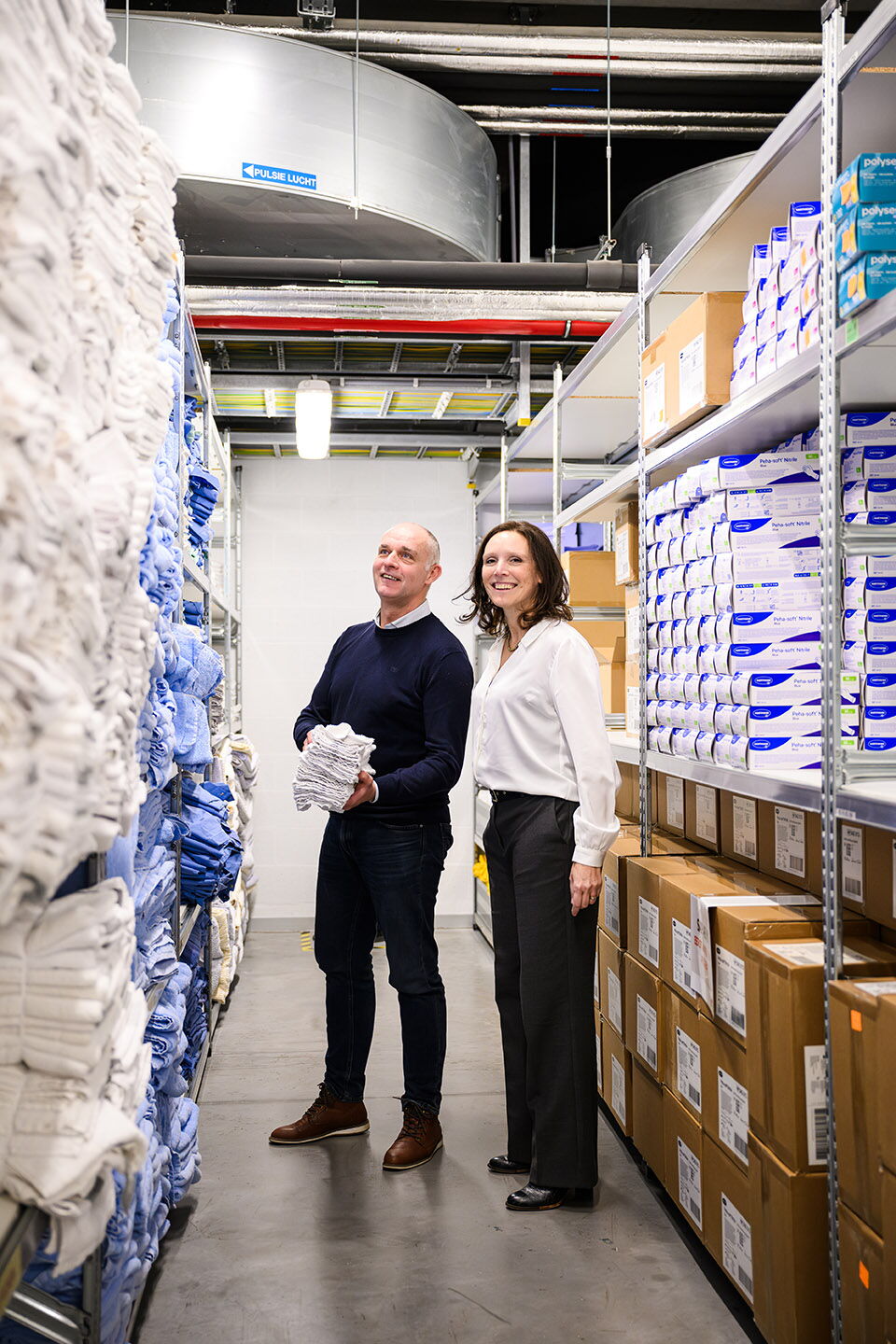
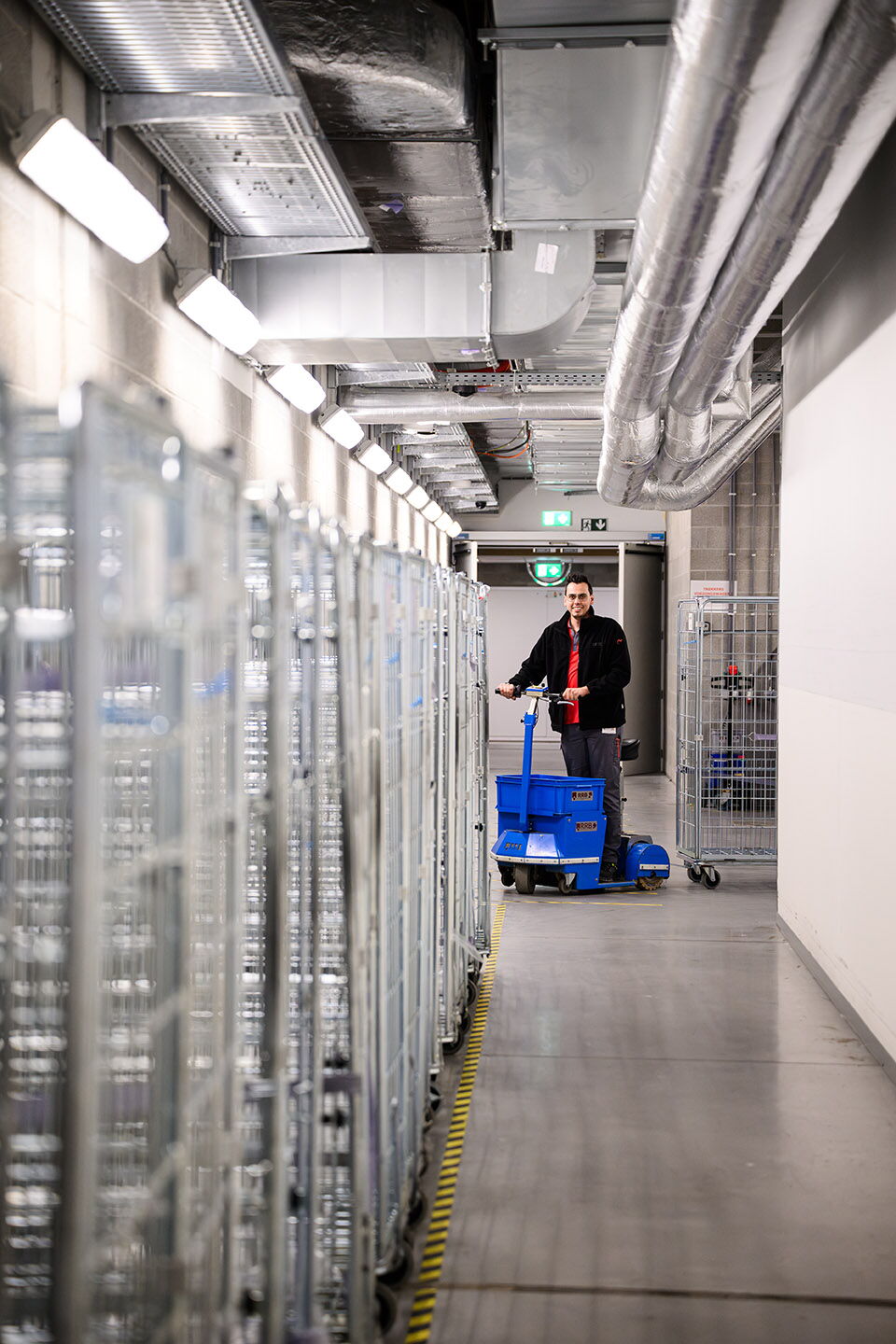
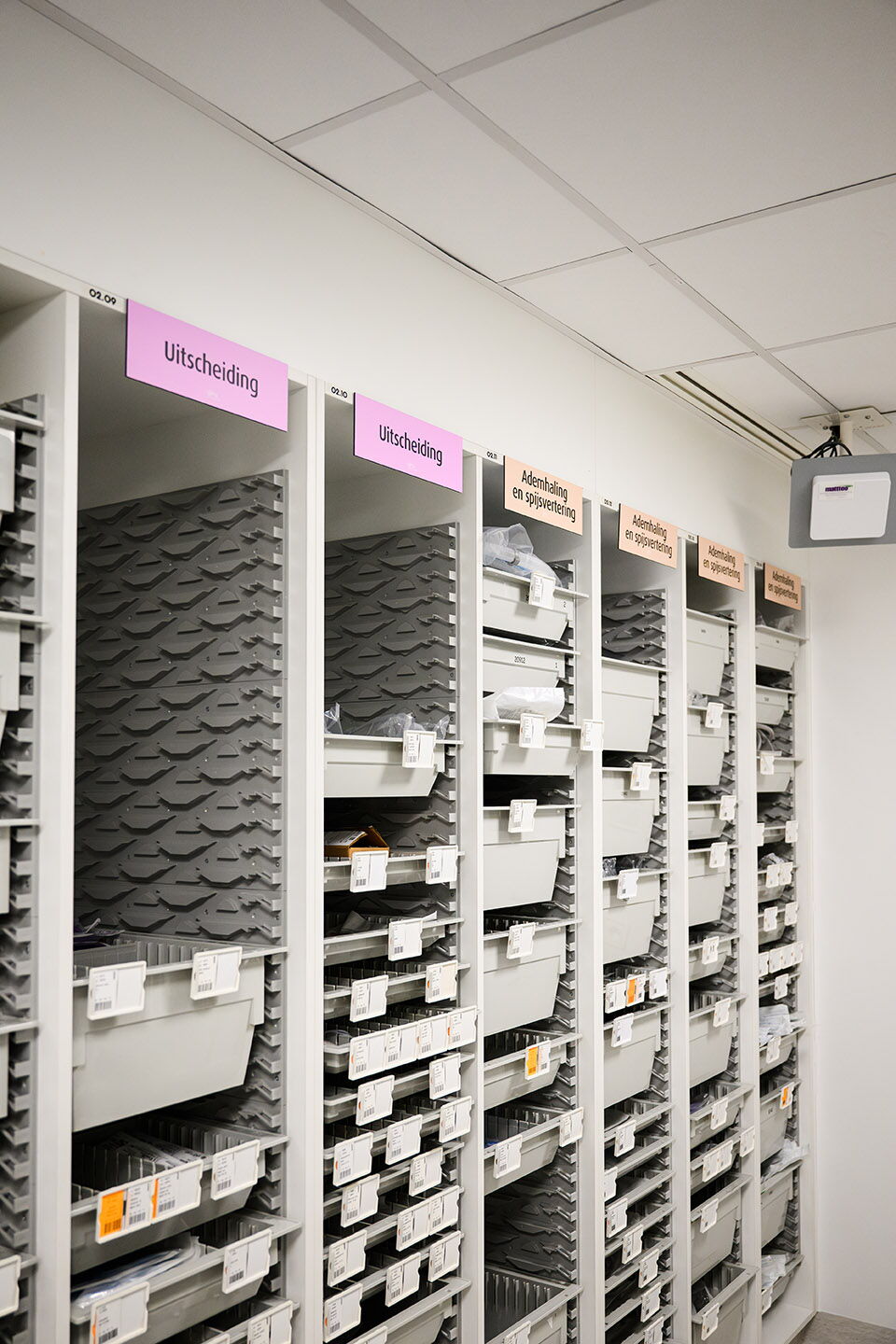
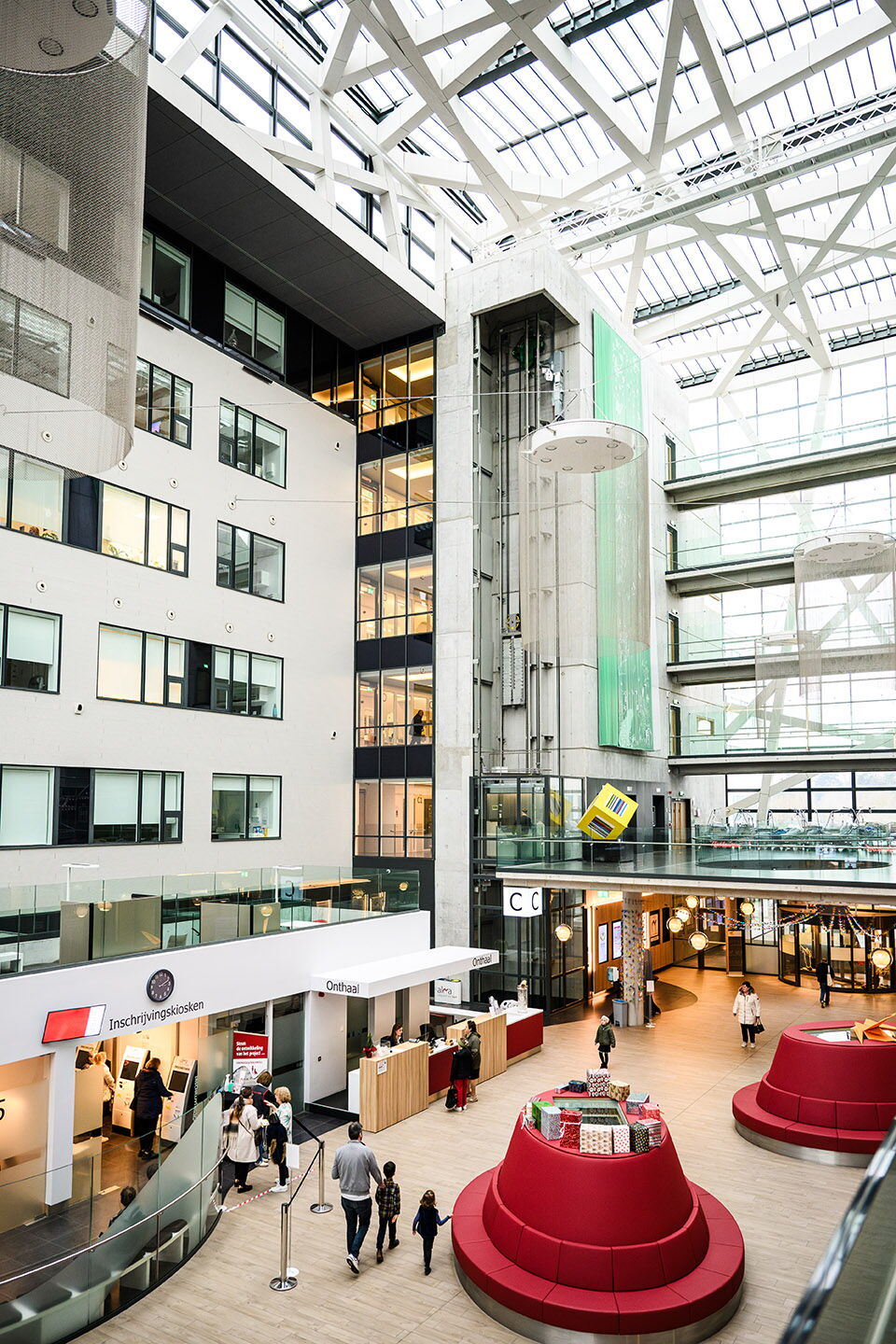
In March 2017, the brand-new AZ Alma building in Eeklo opened its doors. With 500 beds and an extensive range of services, it offers ‘care with heart’ for the youngest to the oldest residents in the northwest of the province of East Flanders. The new building allowed AZ Alma to get the logistics right from the development stage. For the large nursing wards, there is a central column with stock rooms for linen and medical materials. The smaller services are supplied at fixed times from a central warehouse. If certain items run out, then employees fill in a digital order list and De Jaeger’s team brings up the linen, along with medical materials such as disposables and syringes, in one container.
A big plus
This is a big difference from other hospitals, Van Haen says: “I haven’t seen such a combination of linen rooms and warehouse anywhere else”. Still, the advantage of an integrated system is obvious, De Jaeger believes. “In fellow hospitals, you often see that the laundry has to pick 10 dishcloths for one department, and 20 hand towels for another. Then you get containers per department with small quantities that you all have to transport through the hospital, and back again. Now we do a supply run during the week, for all kinds of things. And colleagues order only what they really need. I think that’s a big plus.”
Automatic orders
What if catering indicates that it sometimes runs short of kitchen towels on Mondays? Then De Jaeger increases its central stock, and the department itself can increase the number in the order list. Sometimes even that is not necessary: in the OR, for example, thanks to UHF technology, (limited) stock is automatically registered. De Jaeger: “Then an order automatically arrives in the central warehouse, specifying what item needs to be replenished by how many units in what department. That then gets picked and stocked the next morning”.
Thoughfully designed
For Van Haen, it was “blissful” to be introduced to a hospital where logistics are so thoughtfully organised. “We always do a logistics quick scan before working out the blueprint of our collaboration with a new customer. In my experience, this is the first hospital where we have not had to change anything. The internal operations are so well in place that we did not need to add any additional advice.”
We did, however, look at the number of delivery times, which was reduced from six to three times a week for clothing. This way, the trucks are always well stocked. “You need space for it, of course”, says De Jaeger. “But with us, that was no problem at all. A semi-trailer or trailer can move around here just fine.” Efficient delivery has also further optimised logistics flows inside the hospital.
This makes it clear to all facility managers which items have been delivered to which department, and which come back to the laundry.
Less clothing loss thanks to X-Ray scanners
De Jaeger sees more benefits in the cooperation with Nedlin, which started in 2024 after a public tender. He particularly likes the degree of digitisation and robotisation. AZ Alma, for example, used to have many problems with items left behind in clothing. “When colleagues finish their shift, they throw their dirty clothes in the laundry. Many people leave things in their pockets: scissors, markers, sometimes even a ring.”
One pen being left behind can render an entire batch of clothing unusable. On an exploratory visit to Nedlin, De Jaeger was therefore pleasantly surprised by the number of X-Ray scanners he saw. “Look, it’s our mistake. But I know the price of buying new professional clothing that has entailed in recent years. We also see it in the current figures. The amount of work clothing we have to throw in the bin has been reduced tremendously due to the controls at Nedlin.”
Certain of sufficient linen
The iCollector, the automatic picking system, also appealed to him because of the reduced chance of packing errors. And thanks to the digital customer portal, De Jaeger is always on the ball - which comes in handy when you need to make a change. This also benefits patients, he says. “As a hospital, we have no use for piles of linen that sit idle here for months. But the laundry has to give us operational security in the delivery of quantities. Because we need the right amount of linen to properly supply our internal customers.”
Better insight
In the Healthcare laundry, some of the flatwork is also chipped. A new BI tool charts the data. “This makes it clear to all facility managers which items have been delivered to which department, and which come back to the laundry”, says Van Haen. “This gives them the data they need to start an internal conversation if items are left in the department for too long.” De Jaeger is looking forward to working with the tool. “If a nurse walks to the linen closet and there is nothing in it, I am guaranteed to get an e-mail to increase the stock. Using the BI tool, I grab Nedlin’s data. Then I see: what has been delivered, what is the consumption? Are departments not working in the right way? In that case, we don’t just adjust or increase, but discuss it with the head nurse and make changes only if it is really necessary.”
Optimal comfort
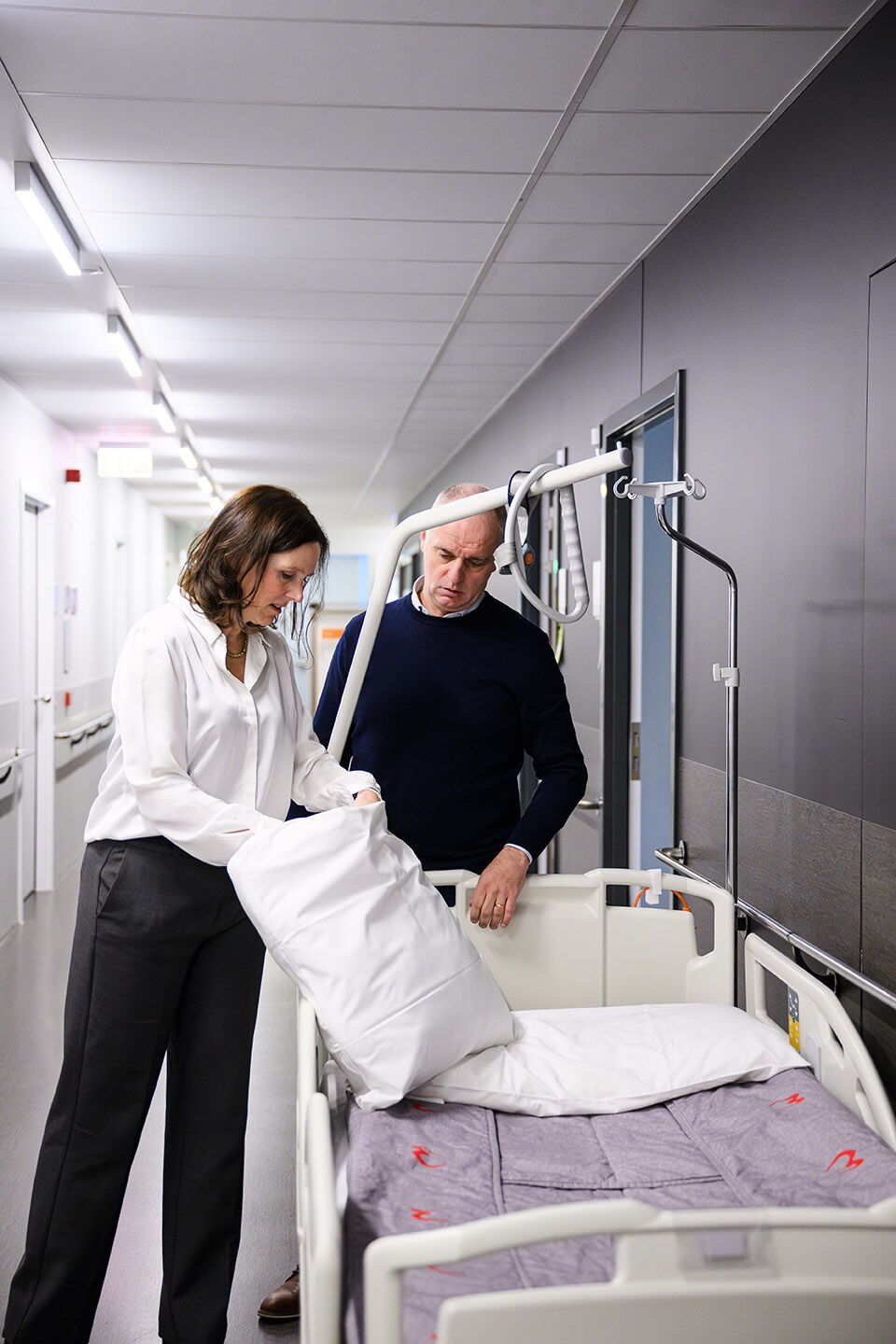
High delivery reliability also allows AZ Alma to make strides internally. “For example: for patients in our nursing wards, we use a duvet. But the day hospital still worked with sheets and bedspreads until recently. Now everyone gets a duvet, which is more comfortable for the patient.” Because ultimately, that is what it is all about, says De Jaeger: “We try to make our patient feel central and secure at all times.” Care with heart, then, thanks to smart design and good cooperation.