

Building sustainable healthcare
Spaarne Gasthuis is a frontrunner in the Dutch healthcare sector when it comes to sustainability. Since the summer of 2025, Nedlin has been handling its laundry. A brand-new partnership that is already bearing fruit. Loes Hooft and Annelies Putters explain why stable partnerships are so important for realising the hospital’s sustainability ambitions.
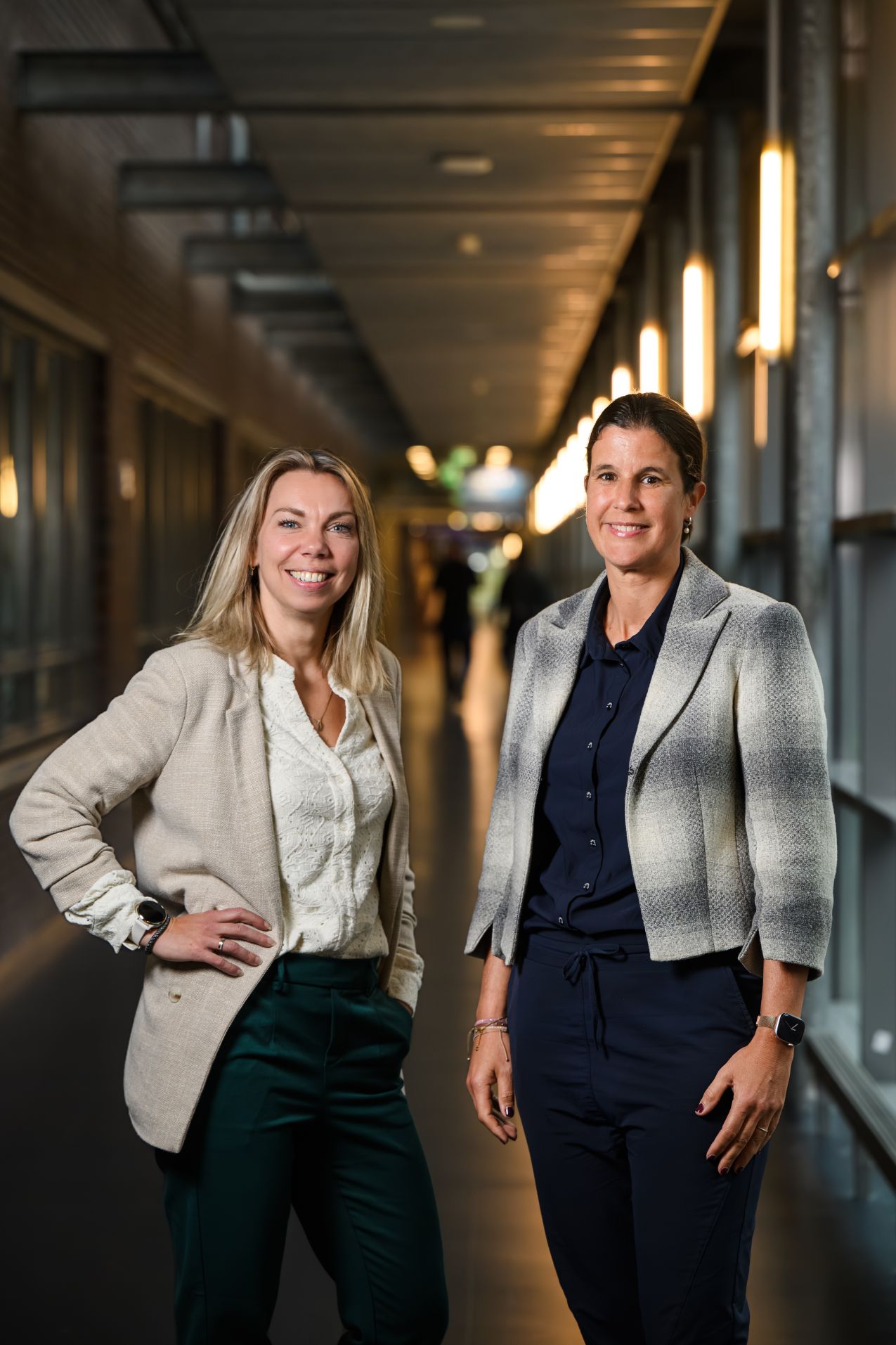
With locations in Haarlem-Noord, Haarlem-Zuid and Hoofddorp, Spaarne Gasthuis is a household name in the Kennemerland region and surroundings. Moreover, thanks to a branch of the Antoni van Leeuwenhoek Hospital and of Baria Nederland, the range of services is exceptional. Equally special is that Spaarne Gasthuis is one of only five Dutch hospitals to have been awarded the Milieuthermometer Zorg Goud.
We are truly one of the frontrunners in sustainability ambitions and initiatives in healthcare.
Frontrunners
“We are truly one of the frontrunners in sustainability ambitions and initiatives in healthcare”, says Annelies Putters with pride. As Head of Kitchen, Catering and Logistics, she is closely involved in the partnership with Nedlin, together with Loes Hooft, Logistics Team Leader. “We are always looking for partners that help us move forward. A facilities company can take care of a great many things for you. That only works if you take on the challenges together. If you share the same ambitions, including in the area of sustainability.” Spaarne Gasthuis has plenty of ambitions. The Milieuthermometer Zorg Goud is proof that the hospital strives to continually develop further in the areas of energy, waste separation and procurement – think, for example, of washable textiles, sustainable cleaning products and the recycling of discarded laundry. In the Milieuthermometer Zorg, 452 Dutch healthcare locations hold the bronze status and 252 hold the silver certificate. Only 18 healthcare locations carry the Gold designation – including the 3 locations of Spaarne Gasthuis.
Ideas from the work floor
This shows how important the hospital considers making healthcare more sustainable. “In my view, there is no other future”, says Putters. “As a sustainable hospital, we want to continuously improve and not stand still. That is why we keep adapting and making our processes more sustainable. We do this at departmental level, but also with Green teams and various initiatives from the floor.” A special department, Spaarne Labs, collects ideas from across the organisation on how to do things differently, better or more logically. Every year, the best idea at Spaarne Gasthuis is announced. Last year, two colleagues from the cleaning team raised the issue of disposables in the isolation room. “Someone had been unexpectedly placed in isolation, which meant all supplies in the room could be contaminated. Items had to be thrown away, linen had to be rewashed. Even though it had not been used.” To prevent such situations in the future, initiatives from the floor are strongly encouraged. “And everyone is involved.”
Trends in the market
You need each other, Hooft emphasises. “From our vantage point, we would never have noticed that clean items were being discarded.” The involvement of colleagues is therefore crucial for continually making things more sustainable. And that also applies to the collaboration with external partners. “We are not occupied with waste all day, or with linen. Our partners need to keep us informed in that regard. It is helpful when they identify the trends in the market for us.” One of the topics that will soon be on the agenda is the replacement of disposables with a washable alternative. As a hospital, Spaarne Gasthuis has a substantial waste stream, with a large proportion of single-use items. That is why Putters and Hooft want to investigate where they can deploy reusables to (partially) replace disposables. “We were looking for a proactive partner who keeps challenging us”, says Hooft. “Because we do not know exactly what is available on the market, but Nedlin does.” Putters: “Our partnership is still in its early stages, but we have high expectations. On the one hand regarding the processes in the laundry, on the other hand regarding processes that have been running in a certain way here for years. We expect Nedlin to help us optimise further”. Take the delivery frequency: previously, every department received linen deliveries five times a week, no matter how small. Now, deliveries are better aligned with demand and the internal route has been adjusted, resulting in more efficient operations.
Decisive factor
However important sustainability is to Spaarne Gasthuis: in the choice for Nedlin, another aspect played an even greater role. Hooft: “In my opinion, no laundry is more sustainable than Nedlin. But the decisive factor is that we find a stable partner in Nedlin. We have the feeling that we are seen and heard, that we truly work on things together. That is very important to us”. Putters: “Healthcare faces a complex future. There are far too few people to meet the demand for care. That requires working differently, doing things differently and better”. Moreover, Spaarne Gasthuis is an ambitious hospital that likes to think in terms of possibilities and explore opportunities. “In that, we are looking for a partner who actively contributes ideas and brings innovation to the table. We have deliberately chosen a long-term partnership, so that we have time to build together.”
With the Smart Workwear Tool®, we determine the allocation based on weekly consumption. As a result, there is never too little nor too much clothing in stock.
Transition
In August 2025, the transition to Nedlin took place. That was a tightly planned operation, according to Hooft. Under the guidance of Stan Smits, Account Manager at Nedlin, the transition was intensively prepared over a period of six months, from a logistics quick scan to implementing all kinds of improvements. Even the smallest details were considered. “In the beginning, we sat down with Nedlin every month, sometimes even every week.” A large group of enthusiastic people were involved in the transition, says Putters. “There was a great willingness, also from the previous supplier and from all the colleagues who supported us.” Smits provided intensive training on the workwear portal and flatwork system. In this area, Nedlin offers full transparency, so that clients can follow the details of their orders in real time.
Automated approach
All information about the clothing package is transparently accessible via the Nedlin web portal. Smits: “Clients can place orders in the portal, see how old their package is and how often each garment is returned”. From January 2026, all clients will have access to a new tool via their account manager: the Smart Workwear Tool®. This automatically calculates the right allocation based on a number of parameters that have been jointly agreed. Spaarne Gasthuis will also be working with the tool. “Until now, the allocation of workwear was calculated manually based on data from the hospital — a complex and time-consuming task for which reliable data was not always available”, explains Smits. “With the Smart Workwear Tool®, we determine the allocation based on weekly consumption.” Three times a year, the figures are reviewed. “As a result, there is never too little nor too much clothing in stock. And it saves a great deal of time in management.”
Working smarter
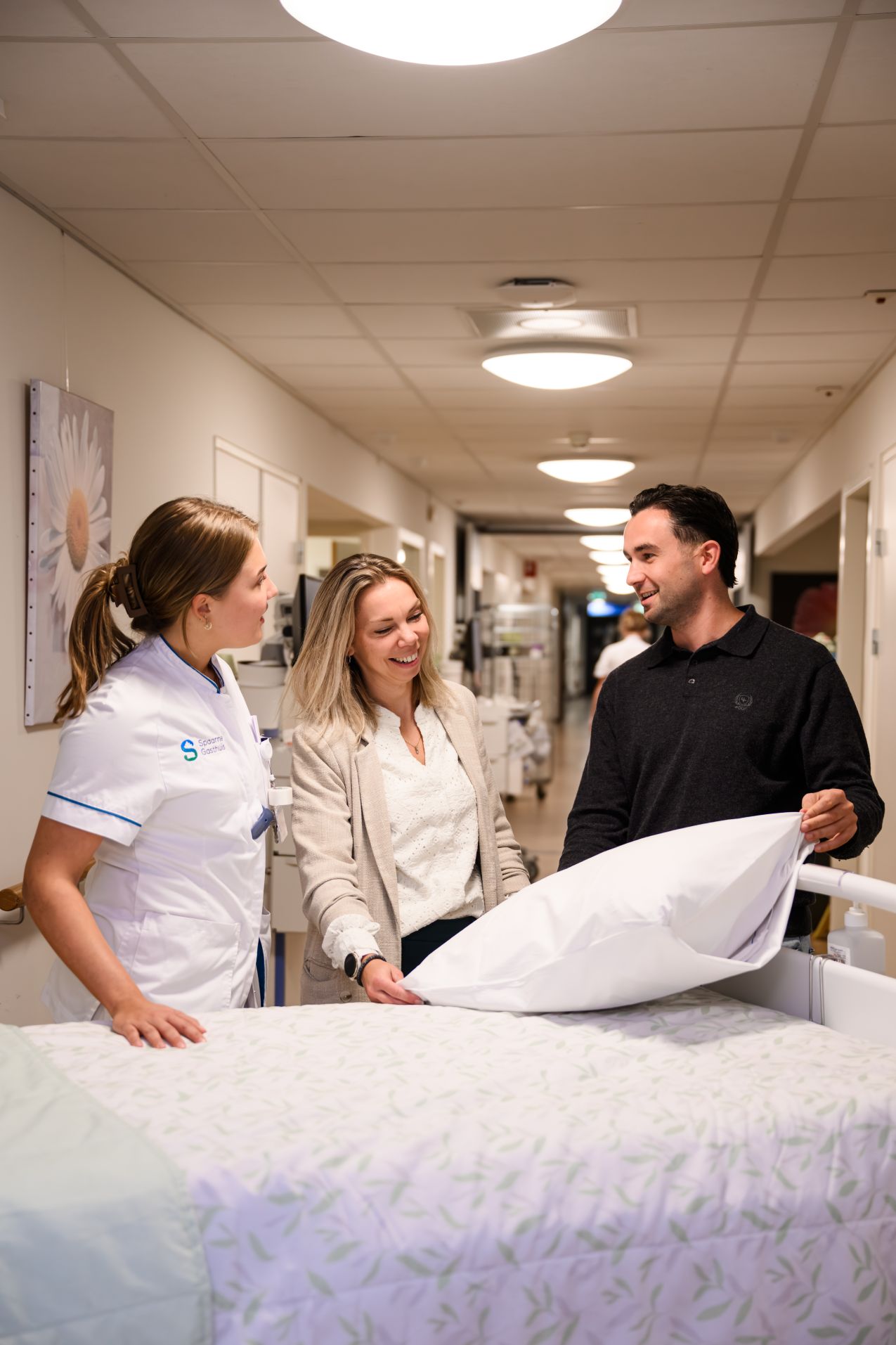
In flatwork, too, Spaarne Gasthuis can now take the next step. During the changeover, it became apparent that a large quantity of linen in the hospital was sitting idle. “At Nedlin, part of the f latwork is chipped and monitored at the scan-in and scan-out points in the laundry,” says Smits. “We present the scanned data in a Power BI dashboard.” This will soon make a great deal of information available about how the linen is used, Putters expects: “We will be much better able to identify where, for example, stock is sitting idle.” With the data in hand, Putters and Hooft can have better conversations with the departments. “Fundamentally, colleagues simply do not want to come up short”, explains Hooft. “So the last thing we want is for anyone in the hospital to feel they are lacking something.” With Nedlin’s data and by continuing to talk with each other, they can now prevent departments from running short. “That kind of thing helps us work smarter.” When asked whether the new linen has prompted reactions, one product stands out: the duvets. “At an early stage, we agreed with Nedlin to design our own duvet. Nedlin suggested organising a vote. That way, everyone is involved. A small project group selected two designs – there was a massive vote on them.” Loes: “From across the hospital, we hear how delighted people are with the duvet. It is so much lighter and more cheerful than before. Patients ask where they can buy it!”.
In my opinion, no laundry is more sustainable than Nedlin. But the decisive factor is that we find a stable partner in Nedlin.